Shaping Product and Driving Commerce: Martina’s Journey into Product Management
Product management is a balancing act: deep knowledge of the product, understanding customer needs, strategic planning, and clear communication. In this interview, Martina shares her career journey into product management, the challenges she faced along the way, and the lessons she learned. Her practical tips are valuable for the next generation of product managers; while her focus on commerce in our product highlights why the latest launch of digital commerce was such a major milestone.
How it All Started: Taking Inspiration from Lectures and Role Models.
Let’s go way back. Do you remember the moment in high school when you decided, “I want to become a manager in a tech company”? What sparked that ambition? From that teenage dream to where you are now, how does it feel to say, “I made it”?
I don’t remember a specific moment, but my father was definitely my biggest role model. He was very technical, and I was around computers much earlier than most of my classmates. He owned an electronics company and was always very technology-driven. I wanted to be a manager and a boss just like him.
Later, I was inspired by a lecture from Mendel University. They came to our high school and presented different study options. That’s when I decided to go for Economic Informatics, which felt like the right field for me since I already knew I wanted to become a manager in an IT company. Later during my Master’s, I added a specialization in Marketing Management.
Your background is quite eclectic; you’ve experienced different roles on your career path. Which skills from those experiences help you most in product management today?
At the end of my bachelor studies, I joined a company focused on mobile application development. It was my first big challenge. It was difficult in many ways, and I realized I didn’t yet have the experience I needed. However, it gave me a clear idea of what to work on and where to grow.
After that, I moved into recruitment as a headhunter for technical positions. It was a great fit because I already had knowledge of programming and tech stacks. I knew how to communicate with candidates, present companies, and ask the right questions. That role also gave me a broad overview of how tech companies operate and position themselves in the market, knowledge I still use today.
Later, I switched to internal recruitment, hiring for a technology department focused on internal products. Through this I knew all the development teams, applications they were working on, and the whole tech stack. That brought me closer to product management. When a Product Manager position opened, they offered me the chance to join.
However, through the change from HR to a management role, I also realized something important: every company is about people, but in the end, business decisions always come first.
Inside the Role of a Product Manager at Kentico.
What drew you to Kentico? And what specifically excited you about the opportunity here?
I wanted to join Kentico ever since starting university. The company had a great reputation in Brno as an employer. It felt progressive and people oriented. I really wanted to be part of that kind of company. At first, I applied for a Technical Writer position. I saw it as a good way to start in IT without being a developer. But my English wasn’t strong enough at the time, and I didn’t succeed.
Still, that experience gave me motivation to work on myself and improve my skills. I kept Kentico on my radar, and later in my career I decided to give it another try. Also, my first experience as a candidate had been positive, so I knew I wanted to apply again. This time, I went for the Product Manager role, and it worked out well.
The first weeks in a new product team can be a whirlwind. Any fun or unexpected moments that made you go, “Yep, I’ve landed in the right place”?
For me, it was the interactions with my team and especially our sense of humor. In my previous company, the product team worked very separately. Everyone owned their own product and focused only on their own goals.
Here, I realized from the very beginning that it was different. We are unified because our goals are shared. We work on one product together and need to stay aligned with the company strategy, customer needs, internal capacities; it’s all connected. We work more like one organism, where communication is key and the focus is always on our vision and strategy.
Can you walk us through a day in your role as Product Manager at Kentico?
No two days are ever the same. I usually start with the regular catch-ups; a bit of admin and syncs with either the product or development team. Then, depending on the stage of the feature delivery process, my focus shifts: some days I’m preparing functionality and building the roadmap, other days I’m in workshops with UX and developers to refine a new feature or work through technical trade-offs.
A big part of my role is also about aligning with partners and clients to make sure our roadmap reflects their needs. On top of that, I spend time on data and research, which feeds into planning and helps kick off new features. What keeps it exciting is that I’m constantly switching between strategic planning and very hands-on problem solving.
What part of the product development process gives you that “flow” feeling, where you lose track of time because you’re so in the zone?
For me, it’s research and communication with clients. That’s where I see the biggest value because you can see the impact of new features almost immediately and hear their feedback and needs firsthand.
How would you describe your team in one word? (And then... explain why!)
That’s a tough question! But I’d say: versatile. Being part of the product team means wearing many hats, covering different perspectives, and constantly switching contexts between different topics. But that versatility isn’t just busywork; it’s what helps us connect the dots, keep the bigger picture in mind, and make our work truly dynamic.
Shaping Commerce in Xperience by Kentico.
Let’s talk digital commerce. The new commerce module in Xperience by Kentico is a major milestone. Why is this launch such a big deal?
It unlocks new possibilities for our clients and helps them grow their business. Commerce has always been a big part of digital experiences, and this step makes the platform much stronger and more competitive. Moreover, we reached the point where we can support upgrades from Kentico Xperience 13 to Xperience by Kentico for the projects where missing commerce functionality was a blocker.
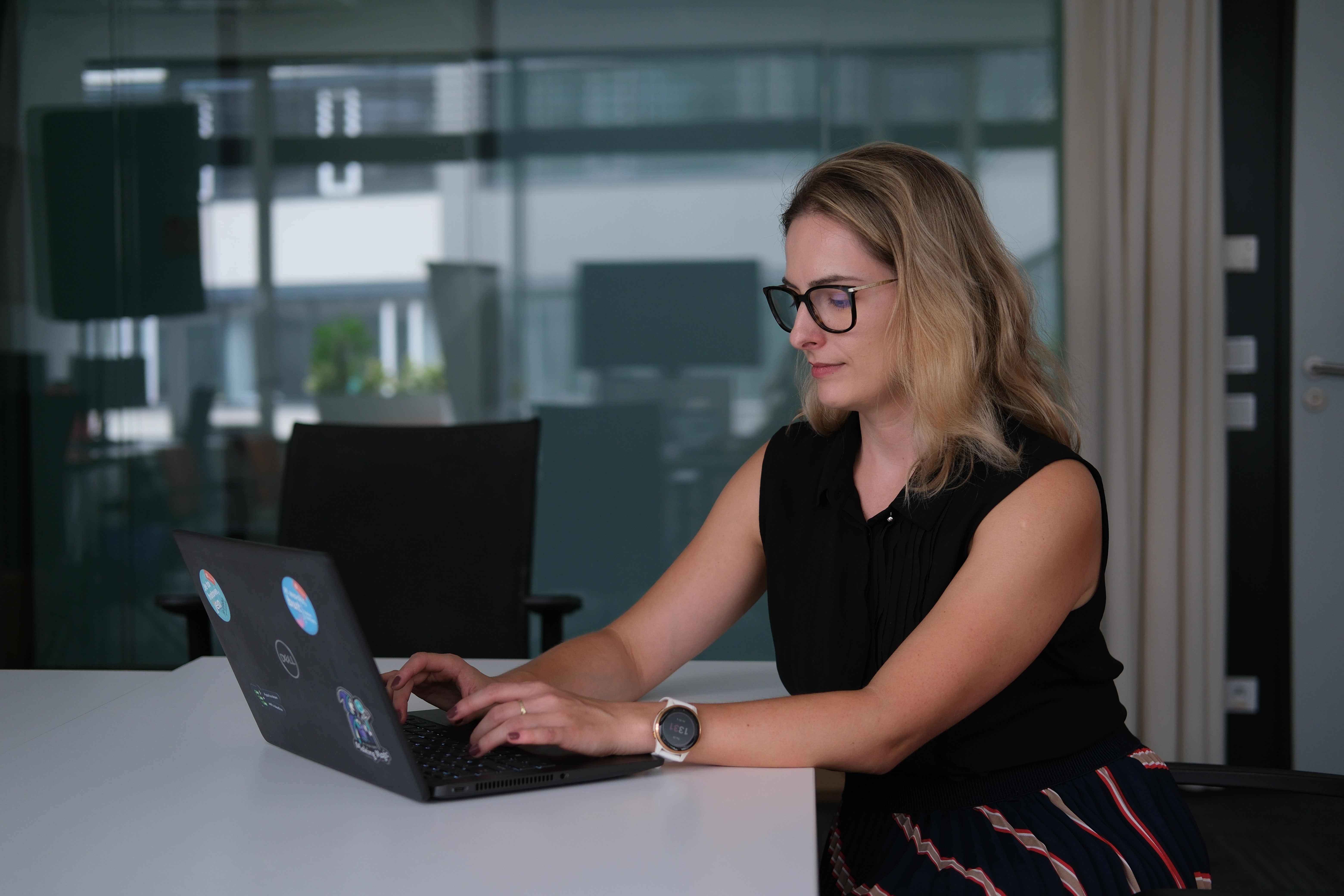
Customers have been asking for commerce capability for some time. What can they look forward to now?
Our current digital commerce in Xperience by Kentico delivers a complete set of core commerce capabilities, making it easier for partners to upgrade their projects. We’re already seeing the first commerce projects that will leverage what we’ve built.
In the coming months, customers can look forward to automated price calculation and discounting features; tools that will help them create compelling offers and boost engagement. For those interested in the full picture, I go into more detail in my blog post: Experience-first commerce is here.
What was the trickiest part of integrating commerce into the Xperience platform, and how did you and the team overcome it?
The main challenge was the ambitious timeline we set for delivering the first phase of our commerce offering, combined with the overall complexity of commerce itself. We had to be smart about how to make it all work.
What helped us most was our close cooperation with Kentico partners and clients. We carried out deep research into their commerce projects and continuously reviewed our functionality concepts with them to make sure it fits their needs.
For me personally, commerce was a new area, so I had to get onboarded very quickly. That research gave me a solid understanding of the types of commerce projects our clients run and supported me in making tough decisions about features and strategy. Looking back, I can say this project helped me grow a lot in my role.
Beyond the Job Title
You’ve combined technology, design thinking, and entrepreneurship throughout your studies and career. Can you share some experiences—whether from your studies, work, or personal projects—that reflect this passion?
I’ve always been drawn to the intersection of technology, management, and entrepreneurship. That’s why, during my studies in economic informatics, I enjoyed working on various tech projects, and later chose an Erasmus program that focused on these areas. One highlight was participating in Dutch Design Week, where our group applied design thinking and smart technology to reimagine how people experience underpasses through interactive lighting.
That curiosity has stayed with me in my career. For example, last year I gave a couple of lectures at universities on product management, sharing how we approach it in practice at our company. I also enjoy experimenting with AI tools to automate parts of my own work, which helps me stay efficient and explore new ways technology can support us. And outside of work, I like going to meetups and talking with friends about the tech projects they’re building; it’s inspiring and keeps me connected to what’s happening in the broader community.
What’s something about you that most people at Kentico might not know?
If I want to keep something secret, I’d better not tell you here. (laughs) But apart from work, I relax through sports. In the past, I was really into powerlifting, it was my biggest hobby. Now, I more enjoy getting better at running and boxing.
Lessons and Advice for Future Product Managers
If you could go back to that high school version of Martina and give her one piece of advice, what would it be?
Take every chance you get, even if it feels too hard or you think you don’t have enough skills yet. New challenges are what move you forward, and you’ll discover you’re more capable than you realize.
What advice would you give to students who are considering a career in product management?
Get involved in as many school projects as you can, and take them beyond the academic space. In this role, you’ll need to communicate with all kinds of people, learn how to lead projects, listen carefully, and ask the right questions.
Stay curious. Keep an overview of what’s happening in the industry: what the trends are, how companies approach challenges, and why. Interest and awareness are key.
What’s a tool, book, podcast, or habit that keeps you sharp or inspired?
Books are great, but product management is mostly about keeping a broad perspective on what’s happening around you. That’s why I recommend attending meetups. You don’t just hear presentations, you also meet people from the field, interact, build connections, and discuss real case studies. Check out Meetup.cz, especially the Agile Meetup and ProductTank communities. They’re excellent for both learning and networking.
More articles in this category
Behind the launch of AIRA Agentic Marketing Suite: David’s reflection on the project and how is Kentico making AI work for marketers
What does it take to turn AI from a buzzword into a real part of a digital experience platform? Recently, Kentico launched AIRA Agentic Marketing Suite, a new way for marketers ...
AI at Kentico: Alexandros on Strategy, Developer Workflows, and What’s Next
What does it take to scale AI across an entire tech company? At Kentico, that challenge falls to Alexandros, our AI Enablement Lead for the R&D department. Alexandros shares wha...